
The Top 10 Italian Feasts in the U.S.
2026 feast season is here. Which Italian festivals are the top in the country?

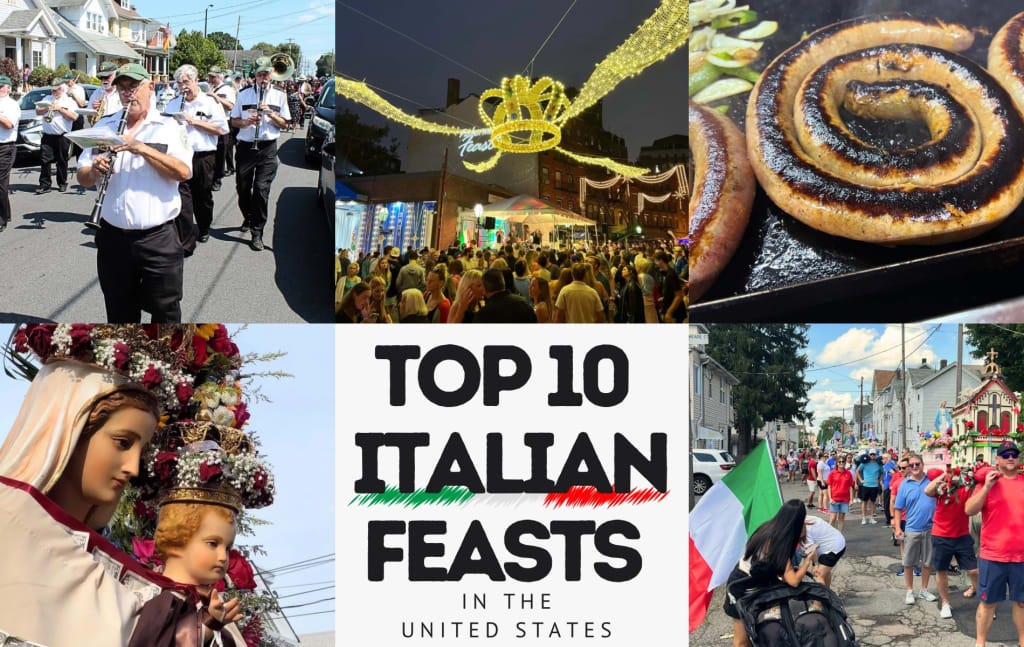
You can smell the sausage and peppers sizzling on the grill. You can hear the bells ringing signifying a saint’s statue has left its church. It is that time of year again - Italian feast season is upon us!
I once met a older gentleman whose encyclopedic knowledge of Italian festivals astonished me. Like a pot-bellied oracle he uttered to us that “the feast is the greatest expression of Italian culture available to us”. He was a wise, yet eccentric character I will cover in a later article for sure.
No two Italian feasts are identical. Different groups of Italian immigrants that landed upon our shores brought with them the saints and traditions of their “paesi”. Sadly, since the pandemic, many of these feasts have gone defunct. The younger generations have secularized. The old timers that had free time to volunteer have passed away. Insurance rates for feasts have skyrockets (as has everything else). It’s very depressing.
But we still have many feasts going strong! They need your support. For now, as a journeyman expert of Italian feasts, I will rank below what The Global Penitent believes to be The Top 10 Italian Feasts in the United States. I will also mention some notable feasts worth attending as well.
*NOTE* If your Italian feast does not have a religious element to it I won’t rank it. The feast is not a “carnival”. It is centered around the saints and religious images that made the journey to the new world with our ancestors. It usually includes a Mass and procession.
Let us begin!
#10. Feast of St. Gerard of Majella, (Newark, NJ)
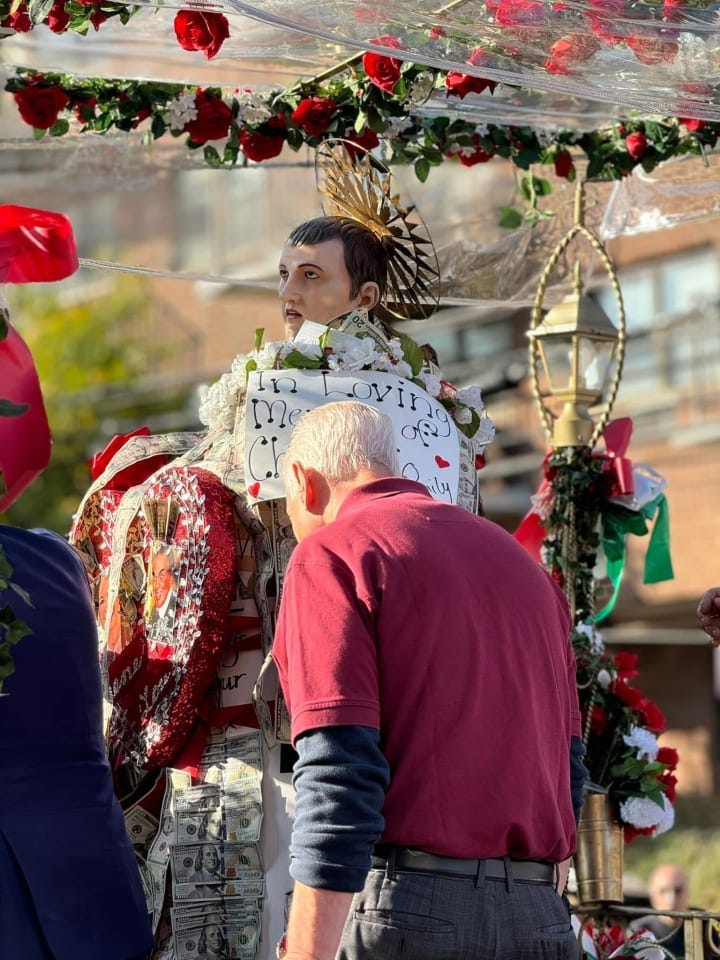
Always theofficial closing of feast season, this feast was once one of the largest in the country. The devotion was brought over from Caposele (Province of Avellino). Although, the Italian enclave of the Old First Ward of Newark is greatly diminished, the feast remains strong and defiant. The descendants of the First Ward return each October to see St. Gerard of Majella return to the streets of their old neighborhood.
They are joined by the growing number of devotees to San Gerardo, all of whom made a pilgrimage to The Shrine of San Gerardo Majella to ask for the saint's intercession in difficult pregnancies. In fact, you encounter several people named "Gerard" or "Gerarda" who are considered "miracle babies". Pilgrims come from as far as Canada and beyond to thank this Redemptorist saint. Yes, it is a fertility festival of sorts. Sonograms of babies can be found near the saint's sanctuary displaying children that doctors said would never be born. Truly amazing stuff!
And although the community shrunk considerably since the 1967 Newark Riots, the feast itself has seen a resurgence as younger leadership has taken the reigns with new ideas (including partnering with a local brewery for an official "feast beer"). This coincides with the city seeing a greater "Brick City Renaissance" in the once crime-ridden, derelict Newark.
#9 St. Anthony of Padua Festival, (Wilmington, DE)
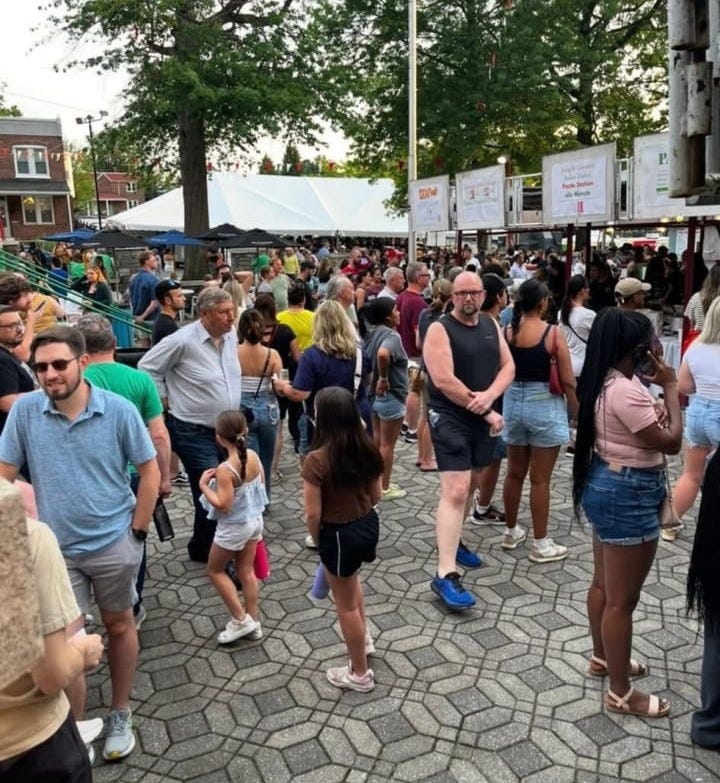
Not many people are aware that Wilmington, Delaware has a decent Little Italy. The city in general is often overshadowed by neighboring metro-areas such as Philadelphia, Baltimore, and New York. However, every June the neighborhood comes to life with a week-long feast celebrating the gorgeous local Italian national parish’s patron, San Antonio di Padua.
But they don’t just celebrate Saint Anthony (although he is the main star), they bring out ALL THE SAINTS. Every saint statue in their gorgeous parish is entrusted to a different group of devotees to decorate and push the cart of. Mother Cabrini, St. Rocco, St. Francesco di Paola, St. Michael the Archangel, even the Irish show up to push St. Patrick! This massive procession twists its way down the cute row-house lined streets.
You see, what makes a successful feast is when the entire neighborhood gets involved. You’ll see the red, white, and green displayed on several homes, but not just Italian flags, I was shocked to see one home displaying the flag of Venice. On the procession route, Fusco’s Water Ice hands out refreshing cups of lemon ice to the devotees. The saints triumphantly all return home to the parish, where the revelry starts.
The church grounds are large and filled with vendors, rides, games, and some of the best feast food I’ve ever tried. They even have olive oil sampling! This community really knows how to do it, which is why this feast is the largest festival in the state of Delaware. I will note, the feast organizers sadly relayed to me that several saint statues were unable to leave the parish due to the lack of volunteers/devotees. I will stress this topic in a future article, but if you’re available the final day of their feast and want to help I implore you to get a carload of pals and go lend a hand. Every saint deserves to see sunshine.
#8 La Madonna di Martiri, (Hoboken, NJ)
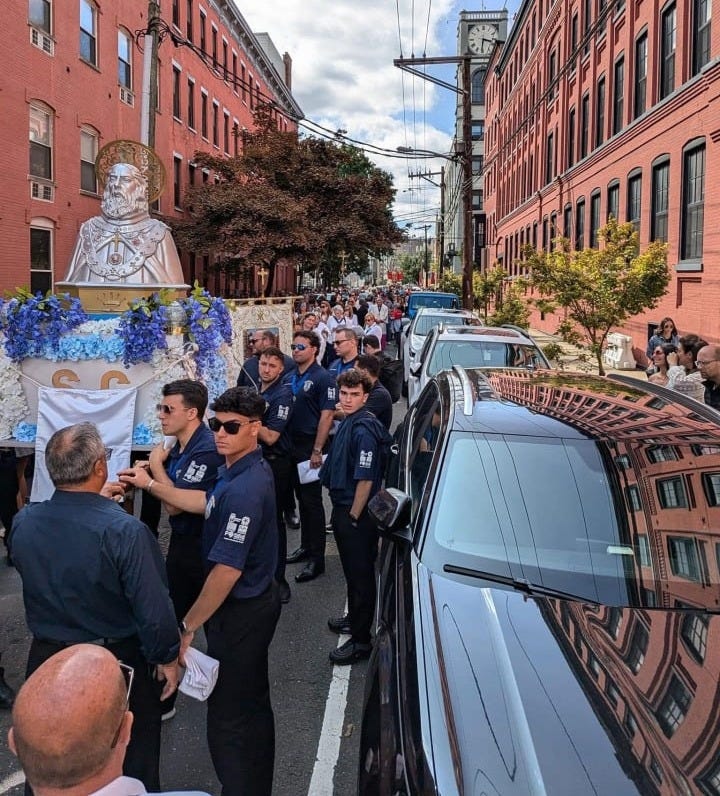
Ah Hoboken, birthplace of baseball, On The Waterfront (1954), and the legendary crooner Frank Sinatra. The city is also home to one of the most unique feasts in the country. Immigrants from the small Barese fishing village of Molfetta found their way to The Square Mile City to work as dockhands and fishmongers. The town proved perfect for them as the geography reminded of home with the large palisades reaching above the shores of the Hudson.
They brought with them a beautiful devotion to La Madonna di Martiri (Our Lady of the Martyrs). The tradition goes that there was once an immense earthquake that hit Molfetta. The people feld to boats and brought the statue of La Madonna di Martiri with them. To their amazement, when they returned the village was spared.
The boat tradition has found its way here as well. Since the September 11th attacks, the statue is processed onto a Hudson River ferry and taken across the river to Ground Zero to pray for the victims of that most tragic day. The feast, which takes place in the beautiful September weather, is set on Frank Sinatra Drive with the Manhattan skyline as a backdrop. The food options are plentiful. Interesting points have been the traditional wooden light frames brought from Italy, a tourism stand for the Region of Puglia, and Serie A calcio setting up trophies in the past.
#7 The Maria SS Lauretana Festival (Chicago, IL)
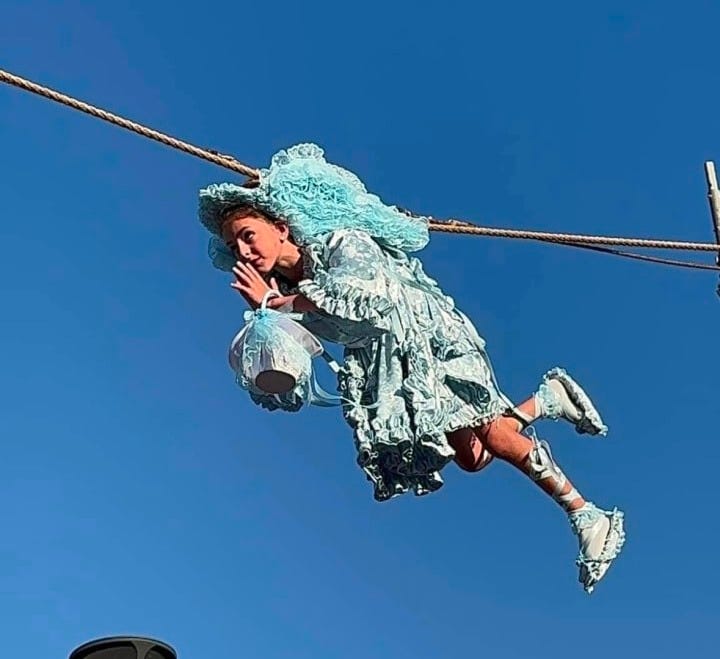
The Feast of Maria SS. Lauretana is one of Chicago’s oldest and most significant Italian-American religious festivals. It was established by immigrants from the Sicilian town of Altavilla Milicia and has been celebrated in the Chicago area since 1900. The society that organizes it, the Maria SS. Lauretana Society of Altavilla Milicia in Chicago, was formally incorporated on September 23, 1900, although the first public feast took place earlier that same year.
Originally held in Chicago's historic Sicilian enclave known as "Little Sicily" on the Near Northwest Side, the feast served as both a religious devotion and a way for immigrants to preserve their cultural identity. As Italian families moved to other neighborhoods and suburbs during the mid-20th century, the celebration moved with them but continued to unite descendants of the original community.
A distinctive feature is the "Flight of the Angels" (Volata), a tradition brought from Sicily dating back centuries. Young girls dressed as angels are suspended above the procession and recite Sicilian prayers and hymns to the Virgin Mary. This dramatic ceremony has become the feast's signature event. This feast is one of two that still maintain this tradition.
Today, the festival combines religious observances—Masses, processions, and devotional ceremonies—with Italian-American cultural celebrations including food, music, carnival rides, and family gatherings. Held annually over Labor Day weekend, it attracts thousands of visitors and is often described as one of the longest-running Italian festivals in the Chicago area.
#6 The Fisherman's Feast, (Boston, MA)
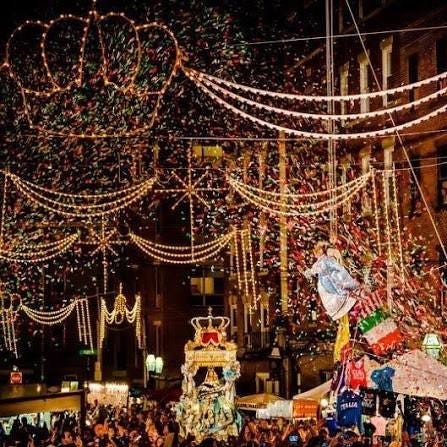
The Fisherman’s Feast is Boston’s oldest continuously running Italian festival and one of the city's most important Italian-American traditions. It was founded in 1910 by immigrants from Sciacca, Sicily, many of whom worked in the Boston and Gloucester fishing fleets. They brought with them a centuries-old devotion to Madonna del Soccorso, the patroness of Sciacca’s fishermen. The feast itself traces its roots back to the 16th century in Sicily, where the Madonna was venerated as a protector and miracle worker.
Originally organized by Sicilian fishermen living in Boston’s North End, the festival became a way to preserve their faith, heritage, and community ties in a new country. Today, it is still organized by descendants of those early immigrants and remains centered in the North End, where it has been celebrated every August for well over a century.
The feast honors Madonna del Soccorso di Sciacca (Our Lady of Help) and celebrates the maritime heritage of Boston’s Italian-American fishing community. The centerpiece is a lengthy religious procession in which a statue of the Madonna is carried through the narrow streets of the North End, accompanied by marching bands, prayers, music, and thousands of devotees. Traditionally, the festival also includes a blessing of the fishing waters in remembrance of the fishermen who founded the feast.
Like Chicago, its most famous event is the “Flight of the Angel”, a dramatic ceremony held on the final night. During the ritual, children dressed as angels deliver devotional messages to the Madonna, while one angel appears to “fly” from an upper-story window toward the statue. The spectacle is the signature moment of the festival and draws large crowds each year.
#5 Brooklyn Giglio The OLMC Feast (Brooklyn, NY)
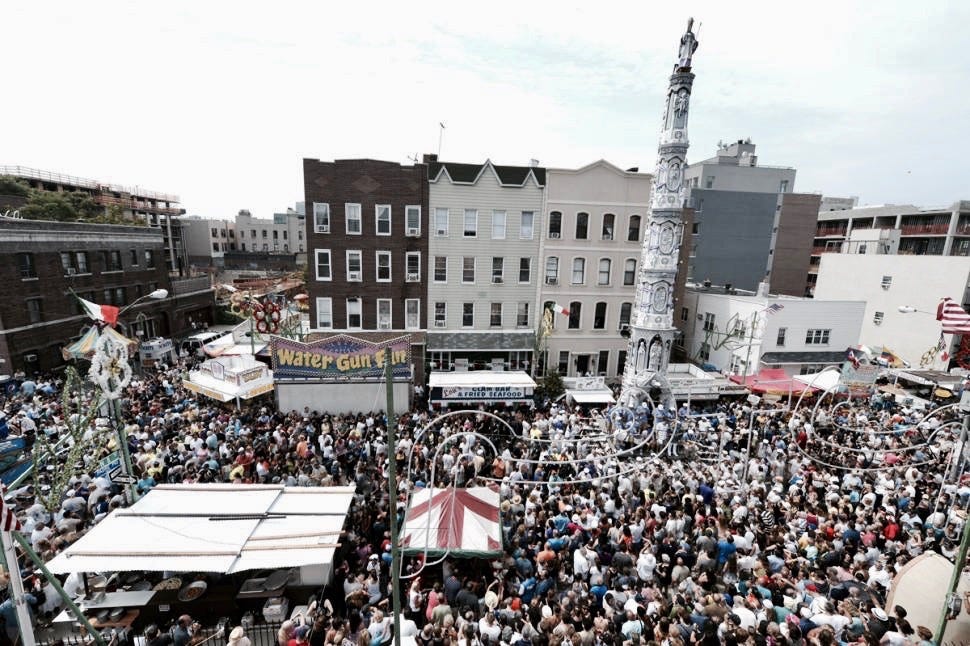
The Brooklyn Giglio, more formally known as the Feast of Our Lady of Mount Carmel and San Paolino, is one of the oldest Italian-American religious festivals in the United States. It is held annually in the Williamsburg section of Brooklyn and traces its roots to immigrants from Nola, Italy, who brought the tradition to New York in the late 19th century. The feast's origins in Brooklyn date to 1887, while the first organized Giglio celebration was held in 1903 by the Società M.S. San Paolino, a mutual-aid society founded by Nolani immigrants.
The festival commemorates Saint Paulinus (San Paolino) of Nola, a fifth-century bishop renowned for his sacrifice and charity. According to tradition, Paulinus offered himself in exchange for the freedom of a captive women in children enslaved by Saracen pirates. When he eventually returned to Nola, townspeople welcomed him with lilies (gigli in Italian) which became the symbol of the celebration. Over centuries, the feast evolved into the spectacular Giglio festival of Nola before being transplanted to Brooklyn by immigrants seeking to preserve their faith and cultural identity.
The centerpiece of the celebration is the Dancing of the Giglio, in which more than 100 men carry and "dance" a towering structure approximately 65–80 feet tall and weighing several tons through the streets of Williamsburg. The Giglio is decorated with flowers, religious imagery, and a statue of Saint Paulinus, while a live band performs from the structure itself. The coordinated lifting, swaying, and turning of the tower is both a religious act of devotion and an extraordinary feat of strength and teamwork. A massive ship with the honorary “Turk” dances as well and meets the Giglio in the streets. It is a remarkable site to bestow.
#4 Saint Joseph's Day (New Orleans, LA)
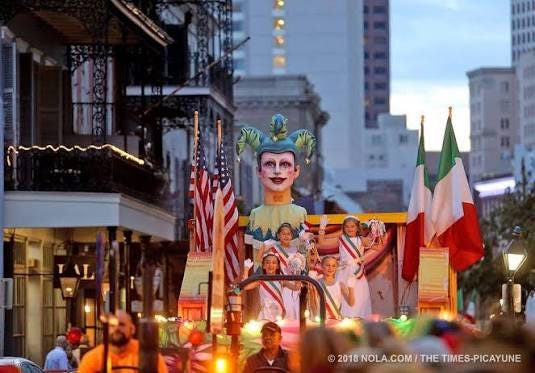
The Feast of St. Joseph in New Orleans, often known through its famous St. Joseph’s Day Altars, is one of the most distinctive Italian-American religious traditions in the United States. It was brought to New Orleans by Sicilian immigrants in the late 19th century, when the city became a major destination for immigrants from Sicily. The tradition originated from a medieval Sicilian legend in which people prayed to St. Joseph during a devastating famine; when the drought ended and crops returned, they honored him with elaborate tables of food shared with the poor. Sicilian immigrants carried this custom to New Orleans, where it flourished and became woven into the city's cultural identity. This is also Father’s Day in Italy.
Food plays a central role in the tradition. Because the feast falls during Lent, the tables feature meatless dishes such as seafood, pasta, breads, cookies, and pastries. Special symbolic foods include fava beans, which are associated with survival during the Sicilian famine and are often distributed as "lucky beans," and elaborate breads shaped into crosses, staffs, and other religious symbols. After the altar is blessed and ceremonially "broken," food is shared with visitors and donated to those in need.
A major feature of this celebration is the St. Joseph's Day Parade, organized by the Italian-American community in the French Quarter. Marchers distribute flowers, beads, and fava beans while celebrating New Orleans' Italian heritage. It is a unique blend of Sicilian, Cajun, and American culture and one of the best parties in the country. Fellas, if you wish to be in the parade, don’t forget your tuxedo!
This is usually the first Italian feast of the season. And what a way to start with a bang!
#3 St. Peter’s Fiesta (Gloucester, MA)
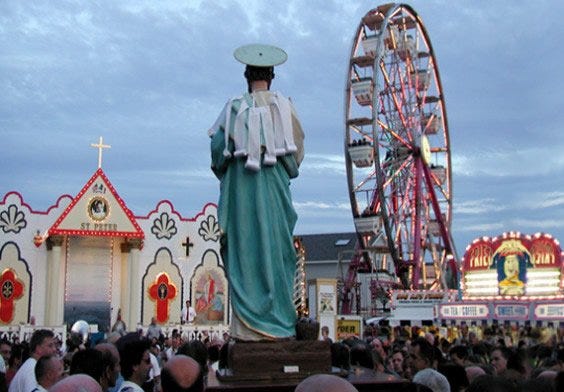
Now we are getting into our top 3. These are the best of the best. We start with St. Peter’s Fiesta in Gloucester, Massachusetts, is one of New England’s most beloved Italian-American religious festivals and the most important annual celebration of Gloucester’s historic fishing community. Founded in 1927 by Sicilian immigrants who had settled in Gloucester’s waterfront “Fort” neighborhood, the feast honors Saint Peter, the patron saint of fishermen. The celebration began when local fishermen enshrined a life-sized statue of St. Peter and organized a religious procession to thank him for protection at sea, pray for safe voyages, and remember those lost on the water. Over time, what started as a neighborhood devotion grew into a citywide tradition and a defining symbol of Gloucester’s maritime identity.
Gloucester’s Sicilian immigrants brought with them the feast traditions of their homeland, adapting them to one of America’s busiest fishing ports. Today, descendants of the founding families continue to organize the festival, which is held annually on the weekend closest to June 29, the Feast Day of St. Peter.
The centerpiece of the celebration is the religious procession of St. Peter. Following an outdoor Mass, a statue of the saint is carried through Gloucester’s streets by fishermen and their families, accompanied by marching bands, religious societies, and community groups. The procession culminates in the Blessing of the Fleet, where fishing vessels decorated with colorful signal flags receive a blessing for safety and prosperity. The ceremony reflects the deep connection between faith and the dangers of life at sea.
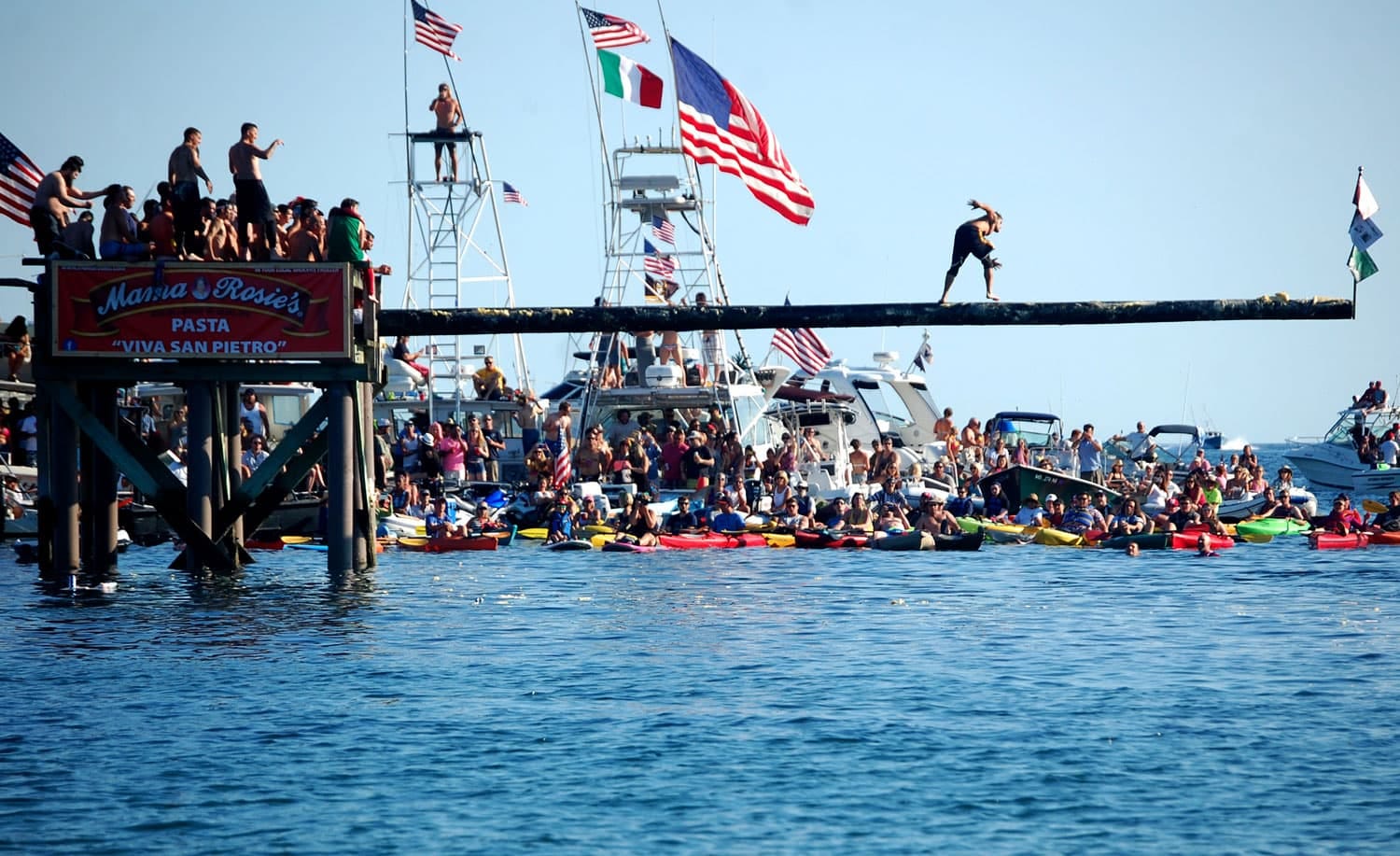
The Fiesta is equally famous for its maritime competitions. The most iconic is the Greasy Pole Contest, introduced in the early 1930s and inspired by Sicilian traditions. Contestants attempt to run across a heavily greased pole extending over Gloucester Harbor and capture a flag at the end before plunging into the water. Winning the Greasy Pole is one of the town’s highest bragging rights and has become a legendary local honor. Another major attraction is the Seine Boat Races, in which crews row traditional fishing boats in grueling races that showcase teamwork, strength, and seafaring skill. Throughout the weekend, the neighborhood is transformed with illuminated arches, flags, music, carnival rides, food stands, and nightly entertainment centered around St. Peter’s Square.
#2 St. Ubaldo Day Festa Dei Ceri (Jessup, PA)
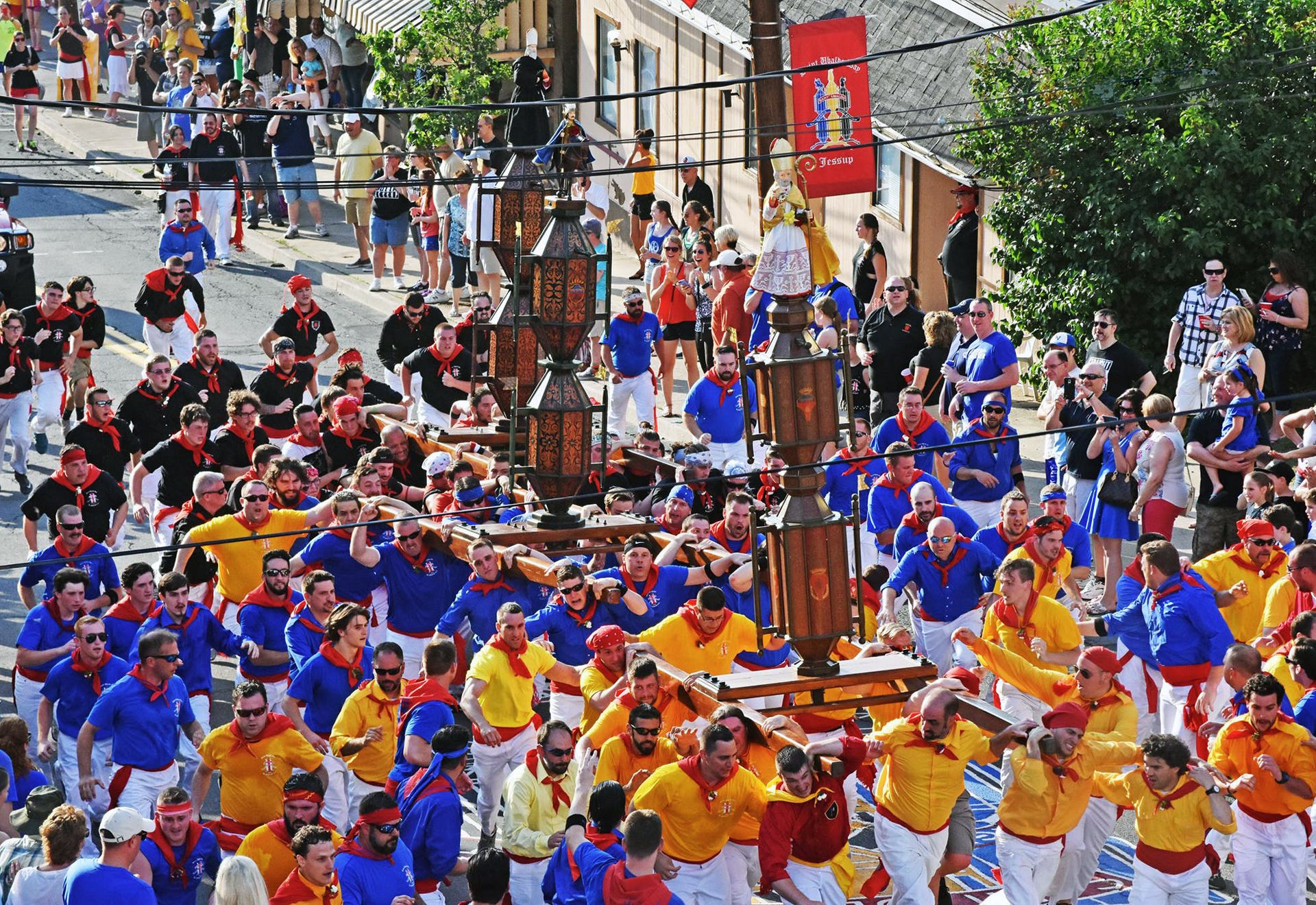
The St. Ubaldo Day (Festa dei Ceri) in Jessup is one of the most unique Italian-American religious celebrations in the United States. It was brought to northeastern Pennsylvania in 1909 by immigrants from Gubbio, Umbria, who came to work in the coal mines of Lackawanna County. It is also unique as one of the few northern Italian feasts in the country.
Homesick for their traditions, these immigrants recreated the ancient Festa dei Ceri of Gubbio, a festival that dates back to the 12th century and honors Saint Ubaldo Baldassini, the beloved bishop and patron saint of Gubbio.
The celebration continued in Jessup until 1952, was revived during the borough's centennial in 1976, and experienced a full renaissance beginning in 2000 through the efforts of the local Saint Ubaldo Society. Today it remains one of the strongest cultural links between an American town and its Italian ancestral homeland, with Jessup and Gubbio maintaining a sister-city relationship.
The centerpiece is the Corsa dei Ceri (”Race of the Candles”), a dramatic procession rather than a competition. Three teams carry massive wooden structures called ceri, each topped by a statue of a saint:
Saint Ubaldo (yellow)
Saint George (blue)
Saint Anthony Abbot (black)
Each cero weighs hundreds of pounds and is carried through the streets by teams of runners known as ceraioli. Although the event is called a race, it is fundamentally an act of devotion, and by tradition Saint Ubaldo always finishes first (the fix is in!)
The day begins with Mass, processions, and the ceremonial Alzata, in which the ceri are assembled and blessed. The afternoon features neighborhood hospitality, with families offering food and wine to visitors, before the runners begin the exhilarating procession through town. The celebration concludes with prayers, songs, and the return of the saints to their resting place until the following year.
Before we get to the top feast in the country I'd like to list a couple honorable mentions.
-St. Anne’s (Hoboken, NJ)
-St. Rocco’s Feast (Fort Lee, NJ)
-St. Andrew’s Feast (New Haven, CT)
-St. Lucy’s Feast (Omaha, NE)
Ok time for the top Italian feast in the country
#1 St. Anthony's Feast (Boston, MA):
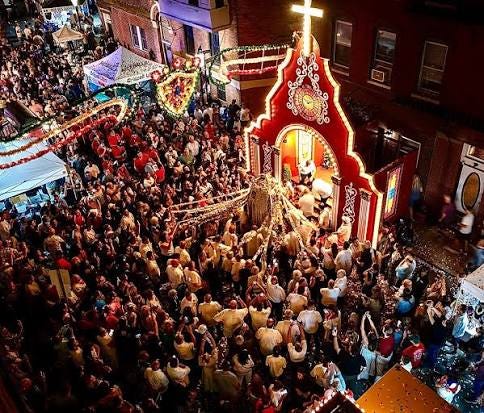
Boston's North End is the feast capital of the country. Without a doubt, the crown jewel of these feasts is in honor of the beloved Sant’Antonio di Padova. The Feast of Saint Anthony is the largest Italian religious festival in New England (and beyond) and one of the most celebrated Italian-American feasts in the country. It was founded in 1919 by immigrants from Montefalcione, a town in the province of Avellino in southern Italy, who settled in Boston's North End and wished to continue honoring their patron saint, Saint Anthony of Padua.
Often called the "Feast of All Feasts," (a title well deserved) it has become the signature event of Boston's summer feast season and attracts visitors from across the United States and beyond.
The highlight of the weekend is the famous ten-hour Grand Procession. A beauitfully adorned statue of Saint Anthony (covered in donated gold jewelry from devotees) is carried through the streets of the North End, accompanied by several different marching bands, color guards, floats, clergy, and thousands of devotees. Throughout the day, worshippers pin donations and prayer ribbons to the statue as it visits homes, businesses, and neighborhood landmarks.
Confetti is tossed from balconies and rooftops as Italian processional hymns fill the air. A relic of St. Anthony of Padua is venerated by attendees. Music is played from the gorgeous historic bandstand. There are so many people jammed pack into Boston’s North End for this festival it is truly a miracle to pull off.
So there you have it. Our list of the top Italian feasts in the country. I know we are going to catch flack for this. If your feast didn’t make it don’t take it as an insult. Let it motivate you to improve upon what you’ve got. Or if you run a secular Italian festival or carnival, it wouldn’t hurt to place a statue of a patron saint at the center of your festa for veneration or reflection. We wish you all a happy 2026 Feast Season. Buona Festa!
Thank you for reading. As always, following and/or becoming a paid subscriber of The Global Penitent helps us continue our writing and research of Catholic and Orthodox faith, currents events, traditions, and other exciting projects we seek to roll out in 2026.
As always, feel free to follow us on Facebook and Instagram for more videos and content